Paver Cleaning and Sealing in New Jersey
Serving Atlantic, Ocean, Monmouth & Burlington County, NJ
Brick, concrete, and natural stone pavers add real value to any property. Driveways, patios, walkways, and pool surrounds across Ocean, Atlantic, Monmouth, and Burlington County all benefit from routine paver care. Left untreated, even the best installations fade, shift, and grow over with weeds and algae.
Pisces Pressure Washing offers paver cleaning and restoration services built around what each surface actually needs. Not every job calls for the same approach, so multiple service tiers are available to fit different budgets and conditions.
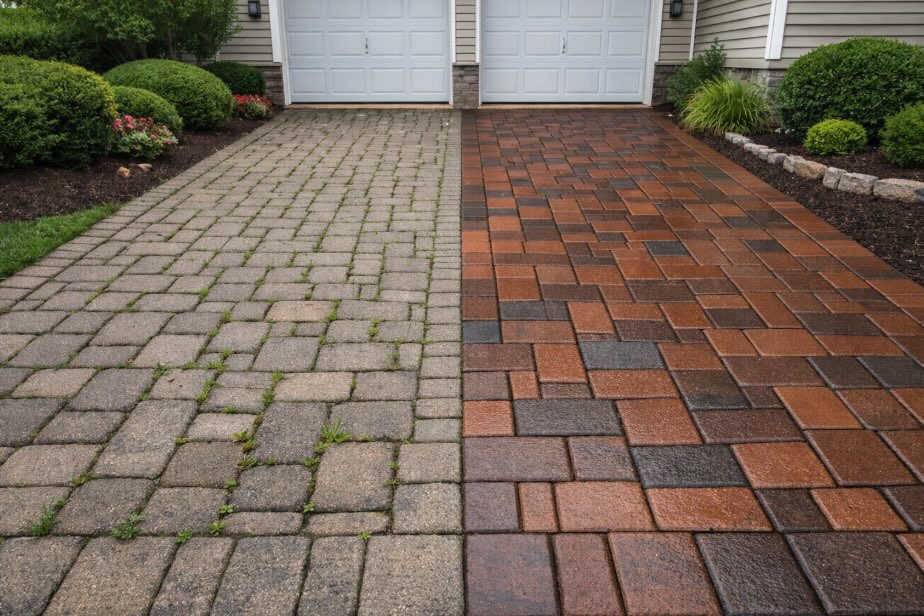
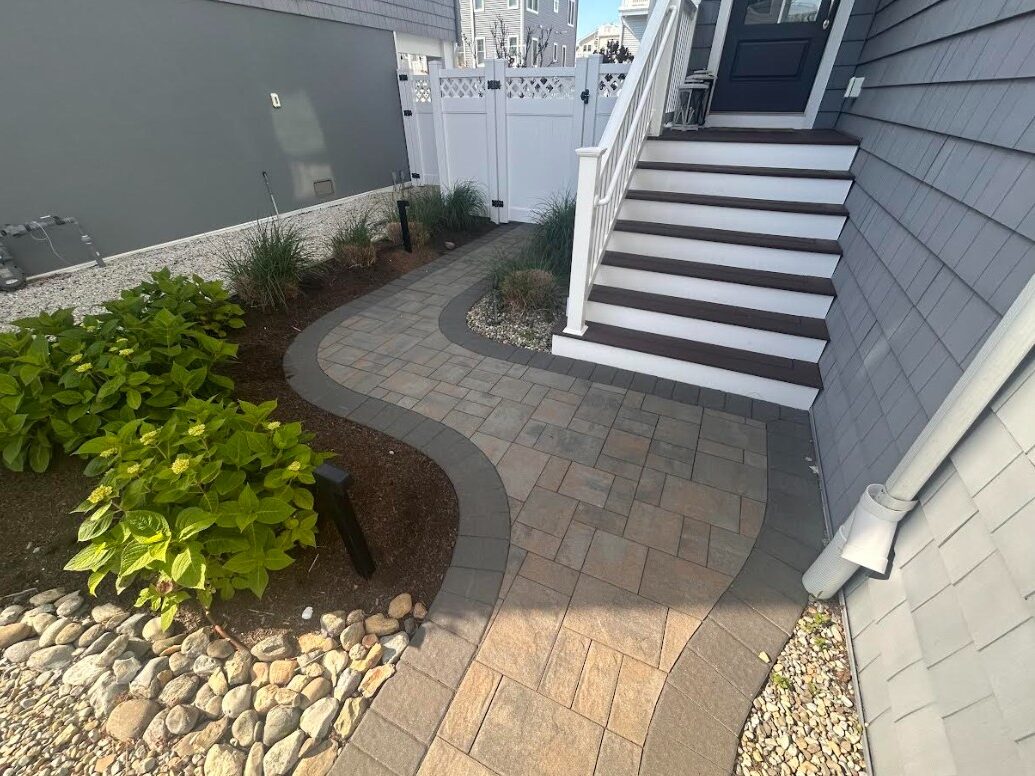
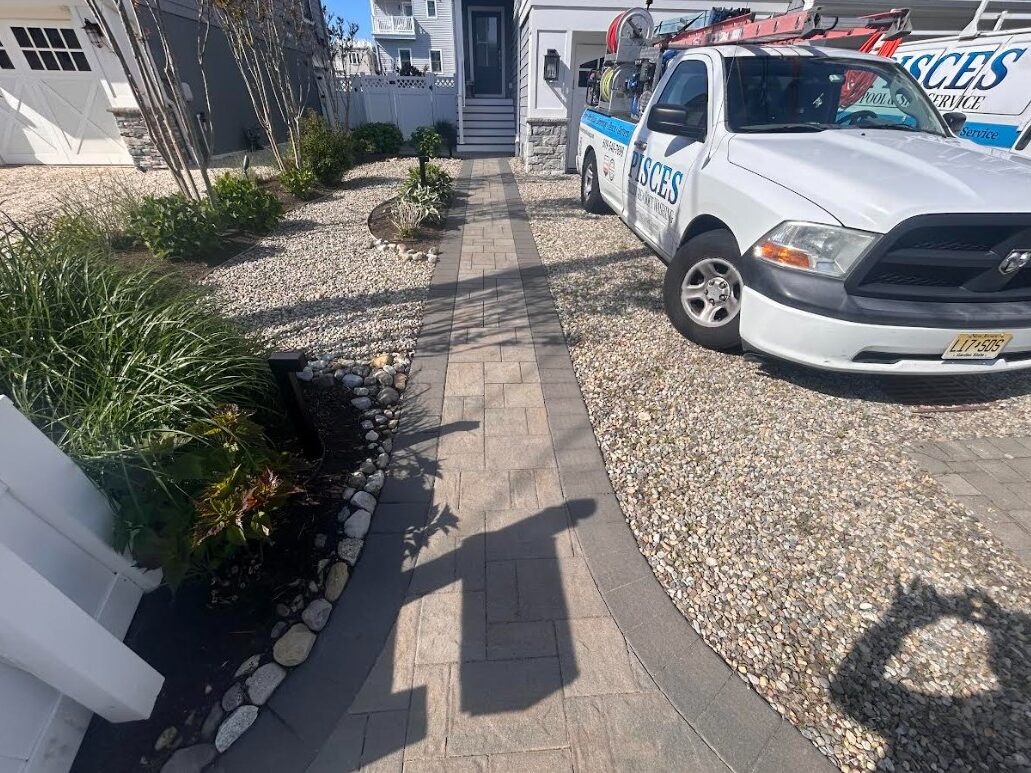
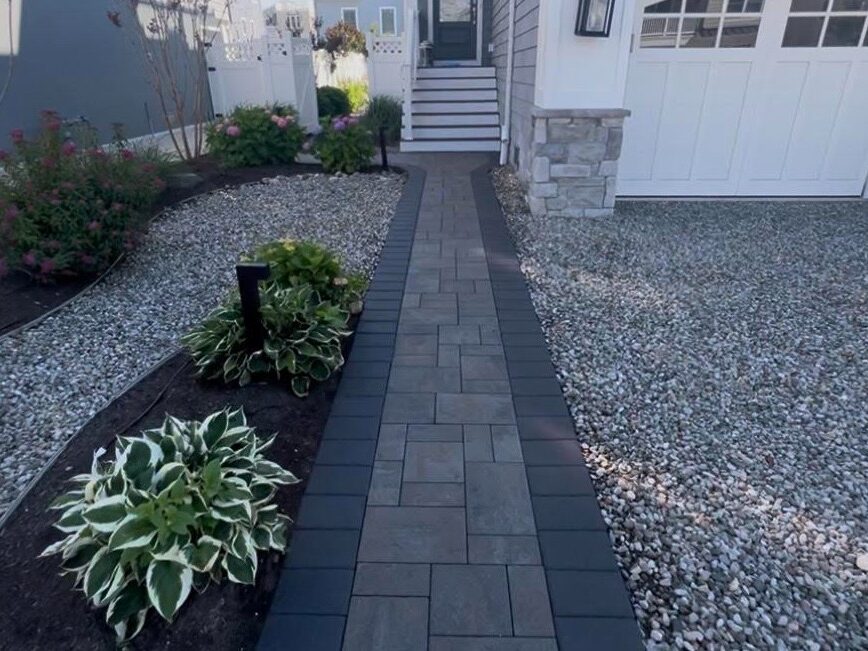
Paver Restoration Services Before and After Project Photos

What Happens to Pavers Over Time?
New pavers look incredible the day they are installed. Rich color, tight joints, and a clean surface give the property an instant upgrade. That appearance does not last on its own, though.
Joint sand is gradually washed out by rain and displaced by foot traffic. Once gaps open up, weed seeds find their way in and take root. Moss and algae follow close behind in shaded or damp sections of the paver surface.
The color of the pavers themselves begins to fade under constant sun exposure. Dirt and organic staining settle into the textured surface and dull the original tones. Within a few years, a once-beautiful paver installation can look neglected and worn.
How We Clean Paver Surfaces
The Surface Cleaner Difference
Most companies run a pressure wand across pavers and call it done. At Pisces, the primary tool for paver and concrete surface cleaning is a commercial-grade surface cleaner. This rotary attachment delivers a consistent, even clean across the entire surface. It removes embedded dirt, algae, and organic staining without the streaking that a standard wand leaves behind.
Pressure washing is still part of the process. It handles edges, joints, corners, and any tight areas the surface cleaner cannot reach. Together, the two methods produce a result that is noticeably more thorough.
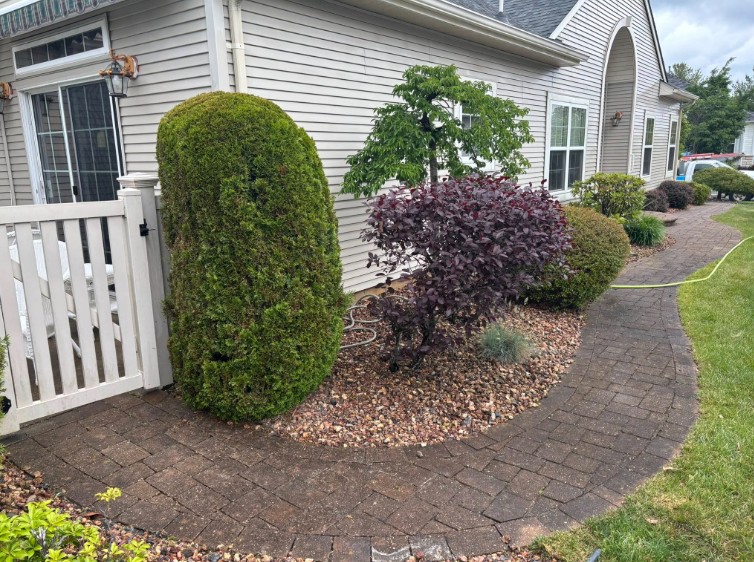

Our Paver Service Options
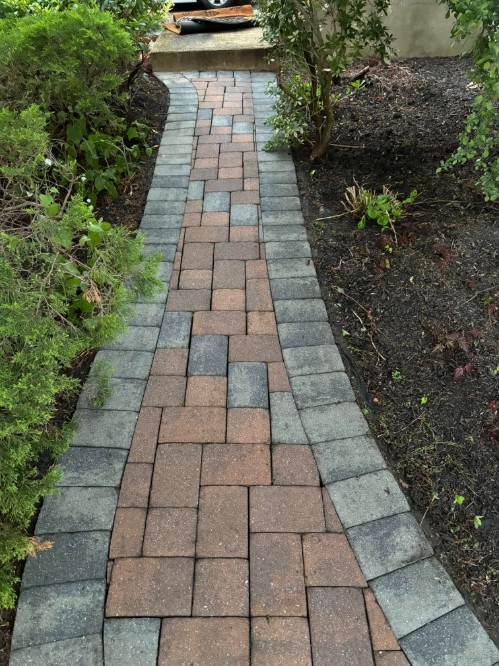
Every job starts with a deep surface clean using the surface cleaner and pressure washing where needed. From there, customers choose the level of restoration that fits their goals.
Option 1: Paver Cleaning Only
A thorough surface clean with no additional treatment. Dirt, algae, moss, and staining are removed from the paver face and joint lines. This is a solid choice for well-maintained surfaces that simply need a refresh.
Option 2: Cleaning and Polymeric Sand Re-sanding
After cleaning, fresh polymeric sand is packed into every joint. This sand hardens when wet and locks the pavers firmly in place. Weed germination is discouraged, and joint stability improves significantly. No sealer is applied with this option.
Option 3: Cleaning, Trident Sand Re-sanding, and Sealing
Trident jointing sand is swept into the joints following the surface clean. A professional-grade sealer is then applied to the entire paver surface. This combination enhances natural color, slows UV fading, and reduces stain absorption going forward.
Option 4: Cleaning, Polymeric Sand Re-sanding, and Sealing
The most comprehensive option available. Polymeric sand is used to re-stabilize every joint after cleaning. A sealer is then applied to protect and enhance the surface. This is the right choice for pavers that have gone several seasons without maintenance or for high-traffic areas like driveways.
What Happens to Pavers Without Maintenance
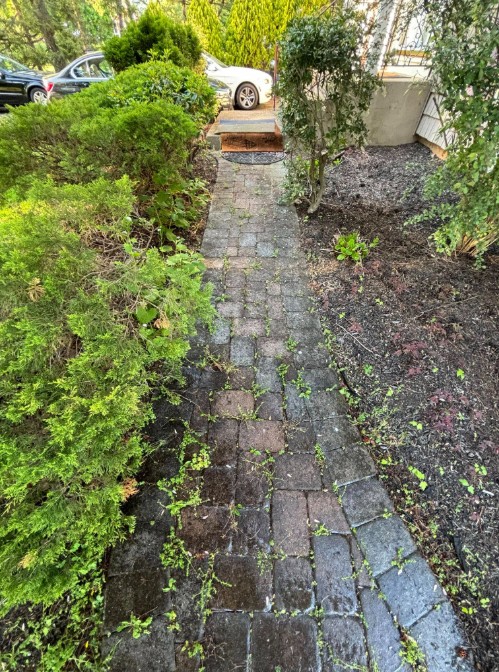
New pavers look sharp the day they go in. That changes quickly without regular attention.
Joint sand is gradually displaced by rain and foot traffic. Once the gaps open, weed seeds move in fast. Moss and algae follow in any area that stays shaded or damp. Color fades under sun exposure, and organic staining darkens the textured surface over time.
A few seasons of neglect can make a once-impressive paver installation look run down. Restoration at that point costs more and takes longer.
Why New Jersey Properties Take More Abuse
Sandy soil conditions throughout Ocean and Atlantic County accelerate joint sand loss. Pavers shift more readily in loose substrate, and coastal humidity keeps organic growth active year-round.
In Monmouth and Burlington County, heavy tree canopy means leaf litter, tannin staining, and persistent shade. Shaded surfaces stay damp longer. That damp environment is exactly where moss spreads fastest.
Sealed surfaces handle all of these conditions far better than bare ones. Regular maintenance extends the life of the installation and keeps the property looking well kept.
Paver Types We Service
Brick and Concrete Pavers
The most common paver materials found on New Jersey properties. Both respond well to surface cleaning and sealing. Concrete pavers come in a wide range of shapes and patterns. Brick offers a traditional look that suits older homes and classic landscape designs.
Natural Stone and Travertine
Frequently used on pool decks and upscale patio installations. These materials are more porous and require adjusted pressure levels and sealer selection. Our crew accounts for the specific stone type before beginning any work.
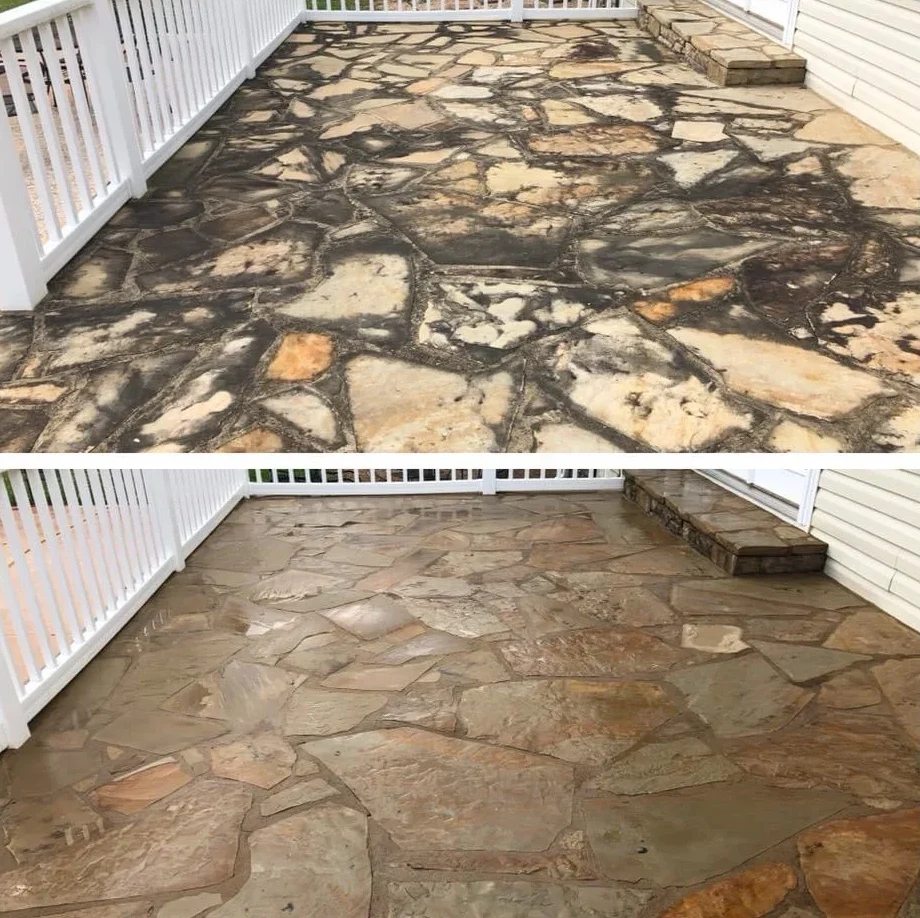
Why Pavers on Your Jersey Shore Property Need Regular Maintenance
Sandy soil is a reality across much of Ocean and Atlantic County. That loose substrate shifts beneath pavers and accelerates joint sand loss. Coastal moisture also feeds algae and moss growth between the joints year-round.
In Monmouth and Burlington County, tree-lined properties deal with heavy leaf litter and sap deposits. Tannin stains from decaying leaves are absorbed into unsealed pavers and leave dark marks. Shaded driveways and patios stay damp longer, which invites moss to spread.
Sealed pavers handle all of these conditions far better than unprotected ones.
How Often Should Pavers Be Cleaned and Sealed?
Every three to five years is the standard recommendation for most residential paver surfaces. High-traffic areas like driveways may need attention sooner. Pool decks exposed to chlorine and sunscreen residue also benefit from a shorter cycle.
A quick visual check can tell you a lot. If water no longer beads on the surface, the sealer has worn through. If weeds are pushing through the joints, the sand has broken down. Either sign means it is time for service.
Get Your Free Paver Cleaning Estimate for Your Home or Business
Pisces Pressure Washing cleans and seals pavers throughout Atlantic, Ocean, Monmouth, and Burlington County. From brick driveways to travertine pool decks, every surface is given the full three-step treatment. Reach out for a free estimate and bring your pavers back to life.